Process guide
How a Roof Restoration Works
A roof restoration is a sequence, and the order matters: inspect, protect, clean, repair, rebed and repoint, prepare, then coat. Coating is the last step, never the fix. Here is what happens on a tile roof and on a metal roof.
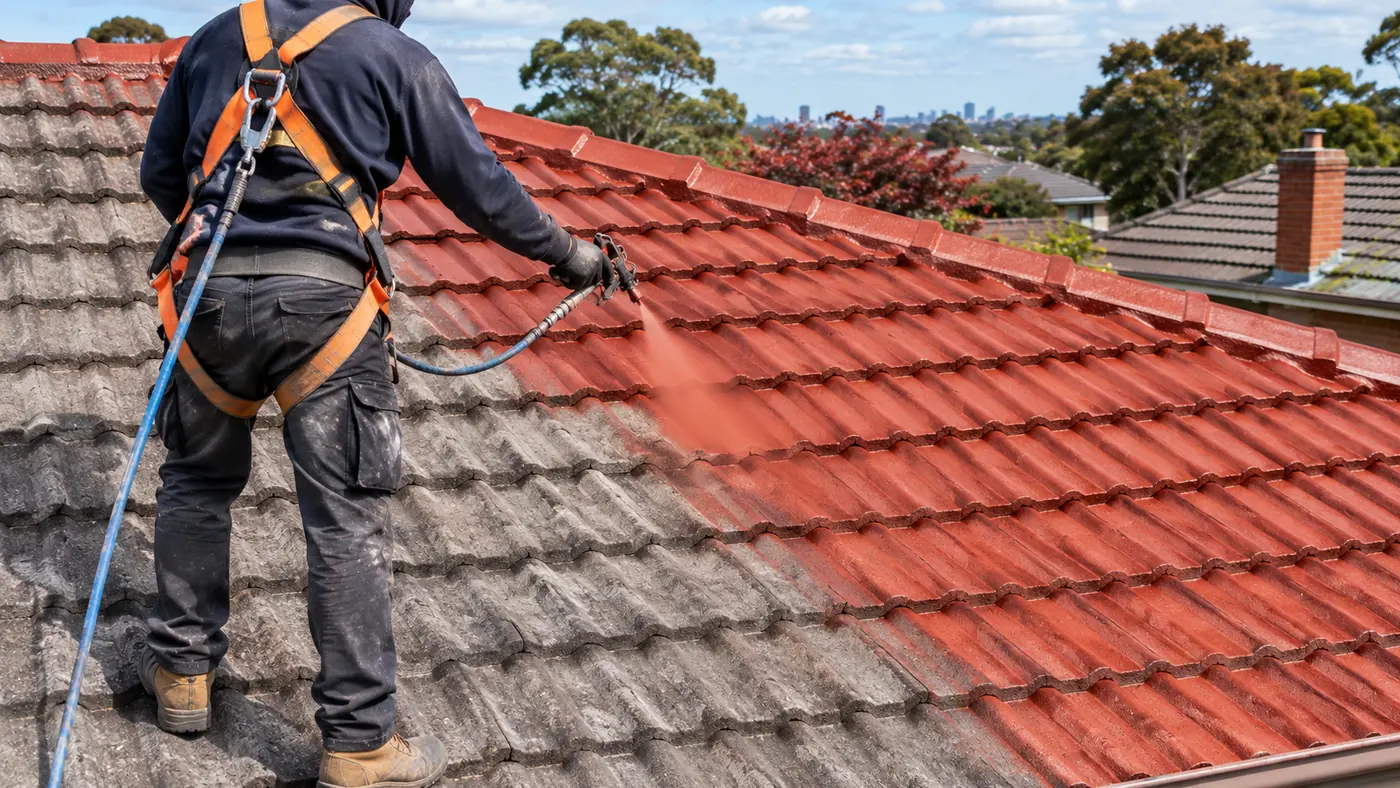
Tile Roof Restoration, Step by Step
Inspection
Tiles, ridges, valleys, flashings and gutters checked for cracks, failed bedding, moss and leaks, with photos.
Site protection
Gardens, paths, windows, cars and solar panels covered or moved where needed.
Cleaning
Moss, lichen and loose surface removed, with pressure and technique suited to the tile.
Tile repairs
Broken and cracked tiles replaced with matching profiles.
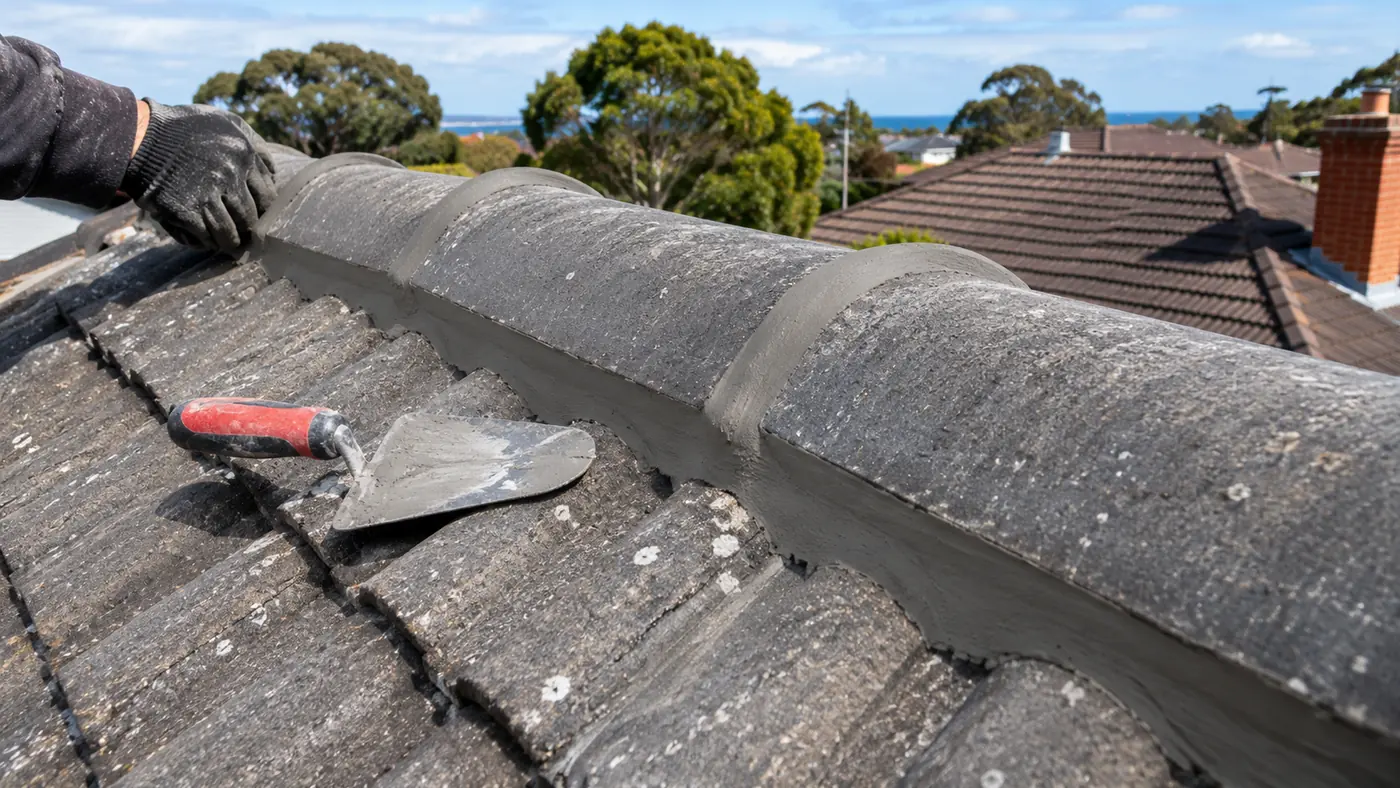
Rebedding and repointing
Failed bedding replaced, then flexible pointing applied over sound bedding.
Preparation
Roof checked dry and clean, and any moss treatment applied.
Sealer and topcoats
Primer or sealer, then topcoats, to the coating maker's specification.
Final check and clean-up
Roof walked again, gutters and ground cleared, photos supplied.
Metal Roof Restoration, Step by Step
Inspection
Sheets, screws, flashings and penetrations checked for rust, holes and lifting.
Cleaning
Dirt, chalking and loose paint removed.
Rust treatment
Surface rust cleaned back and treated with compatible products.
Fixings
Loose or rusted screws and washers replaced.
Sheet and flashing repairs
Holed sheets replaced and flashings refixed or resealed.
Primer
A primer made for the metal type.
Topcoats
Protective topcoats in your colour, to specification.
Final check and clean-up
Roof inspected, swarf and debris cleared, photos supplied.
Preparation matters most on metal: a coating cannot make up for badly corroded or structurally weak sheets. See metal roof restoration.
The Coating System
Most systems are a primer or sealer followed by topcoats, applied to the coating maker's specification for that roof material. Concrete tiles, terracotta and metal each need different products. A good quote names each product and the number of coats, and you can ask for the technical data sheet.
Weather and Curing
Rain, high humidity, strong wind, temperature extremes and damp surfaces all stop coating. Melbourne weather changes quickly, so coating days are chosen around the forecast and the rain-free curing window on the product's data sheet. A delayed coat is better than one washed off before it cures.
Protecting the Property
Cleaning creates runoff and can dislodge moss and debris. Garden beds, paths, outdoor furniture, cars, windows and solar panels should be protected or moved, and runoff kept away from neighbours' yards and stormwater where needed.
Handover
At the end, the roof is walked again, gutters and ground are cleared and surrounding surfaces rinsed. You should get photos of the completed work and the warranty paperwork.
More Melbourne Roof Guides
- Roof Restoration FAQ: Straight answers to 76 common questions about restoring a Melbourne roof.
- Roof Quote Checklist: What a proper written quote lists, and the warning signs in a cheap one.
- Melbourne Roof Conditions: How Melbourne weather, housing eras, salt air and trees affect roofs.
- Roof restoration cost guide: published Melbourne price ranges.
Process FAQs
How long does a roof restoration take?
A straightforward home usually takes several working days. Roof size, condition, repairs, access and weather change that, and coating has to wait for suitable conditions. Ask for an estimated schedule before work starts.
Do I need to be home during the work?
Usually not for the whole job. Someone should arrange access, talk through any concerns beforehand and confirm outside water and power if needed. Tenants should have the work arranged through their landlord or property manager.
What weather stops roof coating?
Rain, high humidity, strong wind, very hot or cold temperatures and damp surfaces. Melbourne weather turns quickly, so rescheduling is better than coating in poor conditions.
How long does a coating need before rain?
It depends on the product, thickness, temperature and humidity. The manufacturer's technical data sheet sets the rain-free window, and the schedule should allow for it.