Local guide
Melbourne Roof Conditions Guide
Melbourne roofs age differently from roofs in Sydney or Brisbane. Changeable weather, decades-old concrete tiles, terracotta on period homes, salt air by the bay and leafy hills suburbs all shape what a roof needs. Here is what to look for in your part of Melbourne.
Melbourne weather and roof ageing
Summer heat and UV, cold wet winters, frosty mornings, strong winds and the occasional hail storm all age a roof. Repeated heating and cooling makes materials expand and contract, which is hard on rigid ridge mortar and on coatings.
Post-war and 1970s to 1990s homes
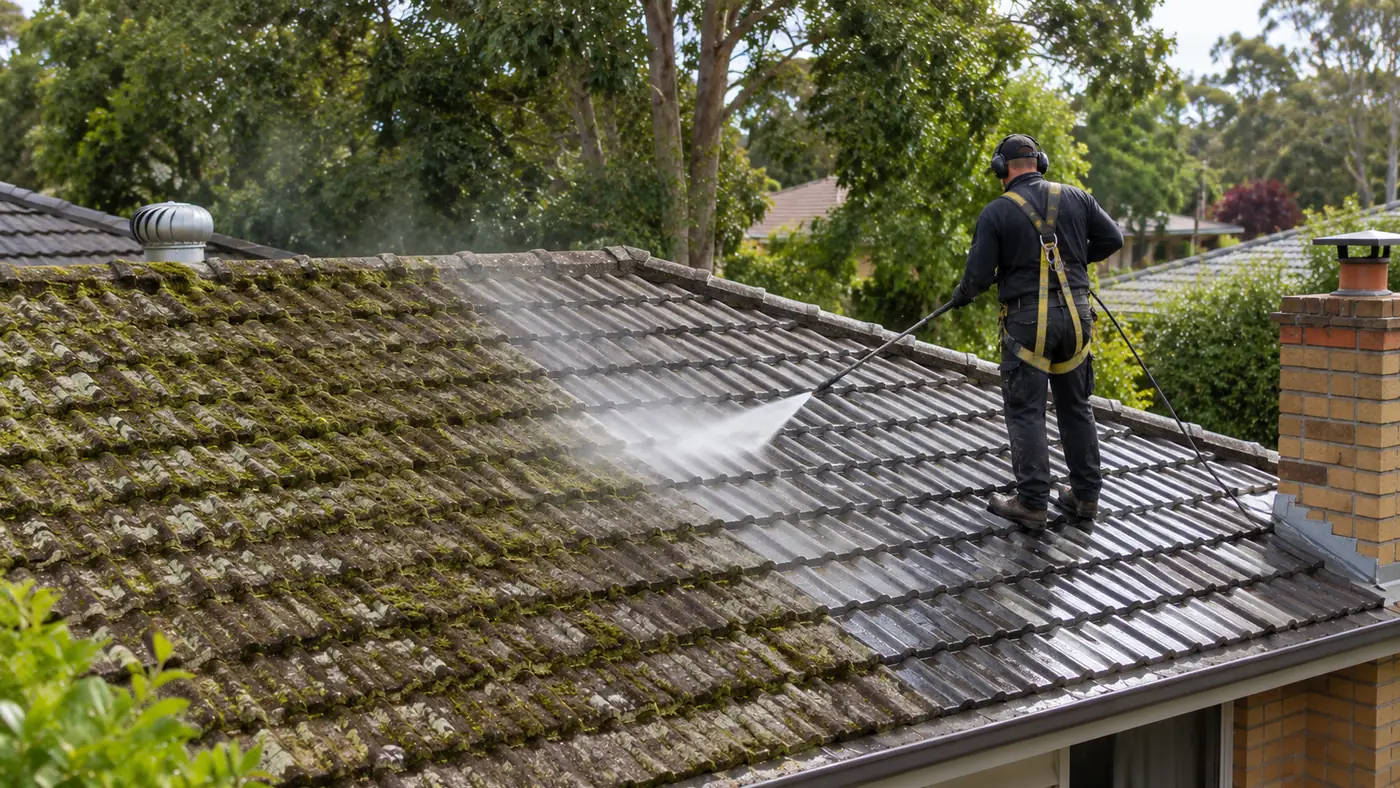
Much of suburban Melbourne was built with concrete tile roofs that are now decades old. Failed ridge bedding, porous or cracked tiles, old patch repairs and moss are common, along with tired gutters and flashings. Age alone does not decide between restoration and replacement; condition does.
Terracotta in older suburbs
Californian bungalows, Edwardian and Federation homes in the inner and middle suburbs often have terracotta roofs. These are usually worth keeping, and the work is mostly cleaning, tile swaps and ridge repairs rather than painting.
Bayside salt air
Homes near the bay see salt in the air, which speeds up corrosion on metal roofing, screws, flashings and gutters. More frequent checks and compatible preparation and coatings matter here.
Leafy and hills suburbs
Homes under mature trees, from the eastern suburbs out to the Dandenong Ranges, deal with leaf litter, falling branches, damp roofs and fast moss growth. In bushfire-prone areas, keep gutters and valleys clear and check with your council about any building requirements for ember protection before changing roofing materials.
Heritage overlays
Roof colour, material and profile can be controlled under a heritage overlay, and some changes need a planning permit. Check with your council before choosing a new colour or replacement material.
Shade, moss and south-facing roofs
South-facing and shaded roof planes stay damp longest, which is why moss and lichen often cover one side of a Melbourne roof and not the other.
Hail and storms
Hail can crack tiles, dent sheets and damage gutters and skylights. Wind lifts ridge caps and flashings. After a big storm, look for visible damage from the ground and arrange an inspection if anything looks wrong.
Seasons and timing
Many homeowners book in spring before summer, or after heavy winter rain shows up a leak. Work can go ahead in winter, but cold, damp surfaces and shorter days limit when coatings can be applied, so allow for weather delays.
Suburbs We Cover
We work across greater Melbourne, including Box Hill, Doncaster, Templestowe, Ringwood, Croydon, Glen Waverley, Mount Waverley, Burwood, Camberwell, Balwyn, Kew, Hawthorn, Bentleigh, Moorabbin, Cheltenham, Mentone, Frankston, Carrum Downs, Dandenong, Berwick, Narre Warren, Cranbourne, Keysborough, Preston, Reservoir, Bundoora, Greensborough, Eltham, Essendon, Keilor, Sunbury, Werribee, Point Cook, Altona, Footscray, Williamstown.
More Melbourne Roof Guides
- Roof Restoration FAQ: Straight answers to 76 common questions about restoring a Melbourne roof.
- How a Roof Restoration Works: Every step for tile and metal roofs, from inspection to handover.
- Roof Quote Checklist: What a proper written quote lists, and the warning signs in a cheap one.
- Roof restoration cost guide: published Melbourne price ranges.
Melbourne Roof FAQs
Why do Melbourne roofs grow so much moss and lichen?
Regular rain and shaded roof planes. South-facing sides get less sun and stay damp longer, and overhanging trees make it worse.
How often should a Melbourne roof be checked?
There is no fixed schedule. A roof under trees or in shade needs more attention than one in full sun. A look from the ground each year and after big storms, with gutters and valleys kept clear, is a sensible habit.
Which roof colours suit Melbourne homes?
Charcoal, dark and mid greys, slate tones and traditional earthy colours are common. Consider the rest of the house, the street, heat absorption and any heritage overlay before you choose.
What are the most common causes of roof leaks in Melbourne?
Cracked or slipped tiles, failed ridge pointing, rusted valley irons, damaged flashings, blocked gutters and downpipes, failed seals around skylights and vents, corroded metal and poor earlier repairs. Water often travels before it shows, so the stain is not always under the entry point.